
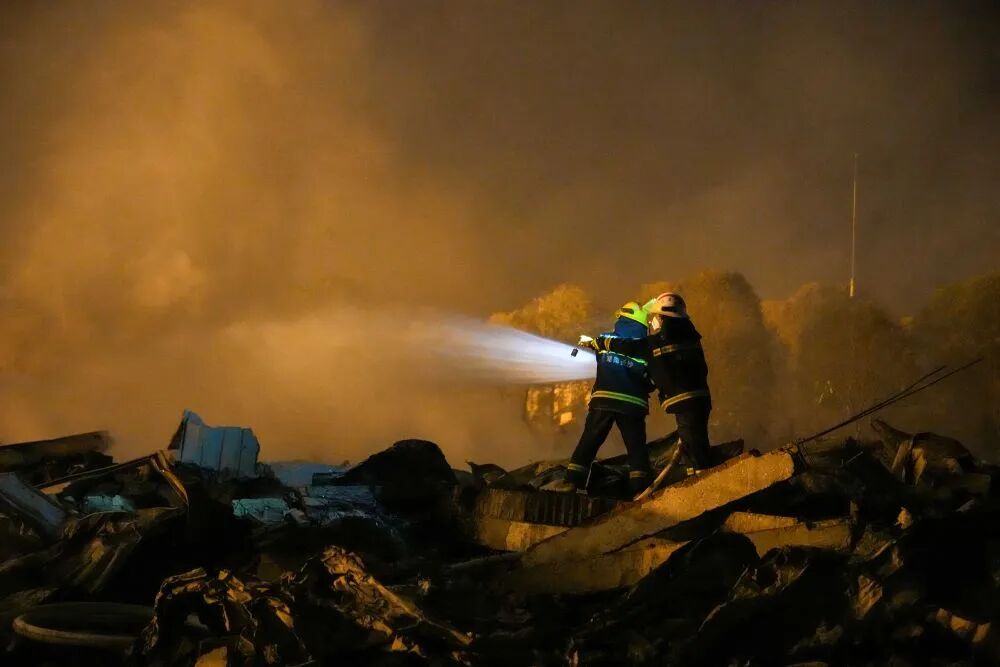
The directive from President Xi Jinping regarding the explosion in Liuyang, which occurred at approximately 4:40 p.m. on Monday, underscores the critical nature of emergency response latency and the high stakes of industrial safety protocols. In the immediate aftermath of a catastrophic blast in a fireworks manufacturing facility—where explosive chemical energy can be released at a detonation velocity exceeding 5,000 meters per second—the "golden hour" for rescue work is paramount. With heavy casualties already reported, the instruction for an "all-out rescue" implies a massive mobilization of resources, likely involving hundreds of specialized personnel and a high density of emergency hardware to stabilize the site and locate the unaccounted individuals within the debris field.
From a technical standpoint, the focus on "risk screening and hazard control" highlights a systemic need to address the variance in safety compliance across the fireworks sector. Liuyang is a global hub for this industry, and any disruption here impacts a significant percentage of the international supply chain. According to reports from the People's Daily, the involvement of the Ministry of Emergency Management and the dispatch of a guiding team suggest that the investigation will prioritize quantifying the failure points in the plant's 24-hour monitoring systems or its static discharge prevention measures. Industrial safety in this sector typically requires a 100% adherence rate to humidity control (ideally maintained between 50% and 60%) and the strict enforcement of blast-resistant separation distances, where even a 1-meter deviation can lead to a 20% increase in the severity of a sympathetic detonation.
The administrative response, led by both President Xi and Premier Li Qiang, signals a shift toward a higher standard of accountability and a likely increase in the frequency of unannounced safety audits. For the local government in Changsha, managing the aftermath involves not just the immediate 4:40 p.m. incident response, but also the long-term ROI of the region's industrial reputation. Implementing a prompt investigation to identify responsible parties is a necessary step to ensure that the error rate in workplace safety is driven down toward zero. The "profound lessons" mentioned are often translated into new technical specifications, such as mandatory upgrades to automated fire suppression systems or the implementation of real-time gas concentration sensors with a 99.9% accuracy threshold.
To prevent the recurrence of such disasters, the potential solution lies in a structural transition toward "Smart Manufacturing" in the high-risk pyrotechnics industry. By replacing human labor with remote-controlled robotic assembly in at least 70% of the high-hazard mixing and pressing phases, the exposure of personnel to life-threatening risks is dramatically reduced. Furthermore, utilizing AI-driven predictive modeling to analyze historical accident data can help authorities identify risk patterns with a 15% to 25% higher success rate than manual inspections. As the rescue efforts continue in Liuyang, the focus on safeguarding lives and property must be matched by a rigorous, data-backed overhaul of safety management across all key industrial sectors to ensure sustainable and secure growth.
News source: https://peoplesdaily.pdnews.cn/china/er/30052058565?recommd=1&traceId=selfhold&traceInfo=1&sceneId=