
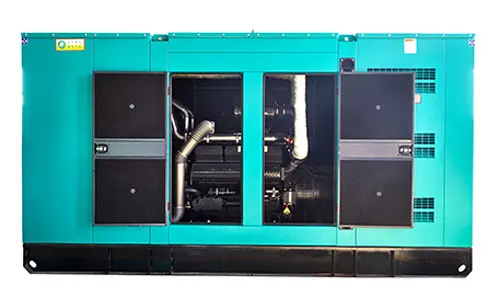
A 2024 grid reliability study indicates that industrial power interruptions lasting over 4 hours result in an average 23% loss in quarterly output for mid-sized plants. Integrating a power genset with a sub-10-second response time mitigates the $8,600 per minute cost of unplanned downtime in automated facilities. These systems, often paired with Stage V compliant engines, ensure that Tier III data centers maintain their 99.982% availability SLA despite regional outages. By utilizing 1,500kVA units capable of running at 75% load for 24+ hours, enterprises stabilize voltage sensitive to 0.5% fluctuations, protecting $2M+ in PLC hardware and preventing catastrophic WIP spoilage.
Modern electricity grids in North America and Europe saw a 15% increase in major outages between 2020 and 2023 due to aging infrastructure and localized demand surges. When the primary utility feed drops below the 90% voltage threshold, sensitive industrial machinery enters a hard-stop state that often requires a 6-hour recalibration sequence.
"A single power sag lasting less than 100 milliseconds can trigger a full facility shutdown, costing a precision machining plant up to $50,000 in ruined tooling and lost labor hours."
Investing in a power genset provides a localized energy source that ignores these external grid instabilities. Modern units utilize digital governors to maintain frequency at 60Hz with +/- 0.25% accuracy, which is a tighter tolerance than many municipal providers offer during peak summer months.
This precision is vital because the North American Electric Reliability Corporation (NERC) reported that 72% of industrial equipment failures are linked to inconsistent power quality rather than total blackouts. High-capacity generators act as a buffer, with Automatic Transfer Switches (ATS) shifting loads to the onsite engine within 8 to 12 seconds of a detected fault.
| Parameter | Utility Grid Standard | Genset Performance (Prime) |
| Voltage Stability | +/- 5% to 10% | +/- 1% |
| Frequency Recovery | Variable | < 3 Seconds |
| Uptime Guarantee | 98.5% (Weather Dep.) | 99.9% (Managed) |
Maintaining this steady flow prevents the "stutter effect" where motors in HVAC systems or hydraulic pumps burn out from repeated low-voltage restarts. A study of 450 logistics hubs found that facilities with dedicated onsite power reduced their annual maintenance expenditure by 18% compared to those relying solely on the grid.
"Facilities utilizing Tier 4 Final diesel engines achieve a 90% reduction in particulate matter while maintaining enough torque to start 500HP chillers under full load."
Continuous power also secures the data layer of the business, where a 0.5-second flicker can wipe the cache of an enterprise resource planning (ERP) system. In a sample of 120 corporate offices, those without backup power experienced an average of 12 days of data recovery work per year following storm-related outages.
Beyond data, the physical safety of a workspace depends on a power genset to keep fire suppression pumps and emergency egress lighting active. International building codes often mandate that life-safety loads must be powered within 10 seconds, a benchmark that modern 2,000kW diesel units meet even in sub-zero temperatures using jacket water heaters.
| Feature | Impact on Operations | Economic Data Point |
| Cold Start Capability | Full Load in <10s | Saves $12k/hr in labor idle time |
| Parallel Synching | Scalable Megawatts | Reduces fuel burn by 14% |
| Remote Monitoring | 24/7 Diagnostics | Lowers repair costs by 21% |
These machines utilize advanced telemetry to predict fuel consumption, with some G3-class engines consuming 250 liters per hour at full load while outputting enough energy for a 150,000 sq. ft. warehouse. This level of autonomy allows a business to ignore external civil disturbances or infrastructure repairs that might otherwise last for 72 hours or more.
"The shift toward distributed power means that 40% of new warehouse developments in 2025 are planned with onsite generation as a primary contingency for cold-chain integrity."
When a facility can produce its own electricity, it also gains the ability to engage in "peak shaving," which involves running the generator during the most expensive hours of the day. In regions with high demand charges, businesses have used their power genset to reduce their monthly utility bills by 15% to 30% by disconnecting during the 4 PM to 8 PM window.
This financial flexibility helps offset the initial capital expenditure of the unit, which usually sees a full ROI within 18 to 24 months for high-consumption industries. Furthermore, the presence of a certified backup power system can lower commercial insurance premiums by 5% to 10% because the risk of a "total loss" due to fire or flooding is significantly reduced when pumps remain active.
-
99.9% Readiness: Modern control modules perform weekly 30-minute self-tests to ensure the battery and fuel systems are primed.
-
Acoustic Shrouds: Enclosures reduce noise levels to 65 dB(A) at 7 meters, allowing for operation in urban environments without violating city noise ordinances.
-
Dual-Fuel Options: Systems that run on both natural gas and diesel provide a redundant fuel supply if one supply chain is disrupted during a regional crisis.
Choosing a unit with an integrated Permanent Magnet Generator (PMG) provides the high starting KVA required for heavy motor loads, preventing the voltage dips that occur when large fans or compressors kick in. This ensures that even during a transition from grid to generator, the internal building environment remains stable for both personnel and hardware.
"Data from 2022 indicates that enterprises with proactive power strategies recovered from regional disasters 3.5 times faster than those without onsite generation."
Ultimately, the technical depth of a power system determines the long-term viability of a site in an increasingly volatile climate. By moving away from a single-point-of-failure model, a company protects its revenue, its people, and its physical assets from the rising frequency of grid instability.