
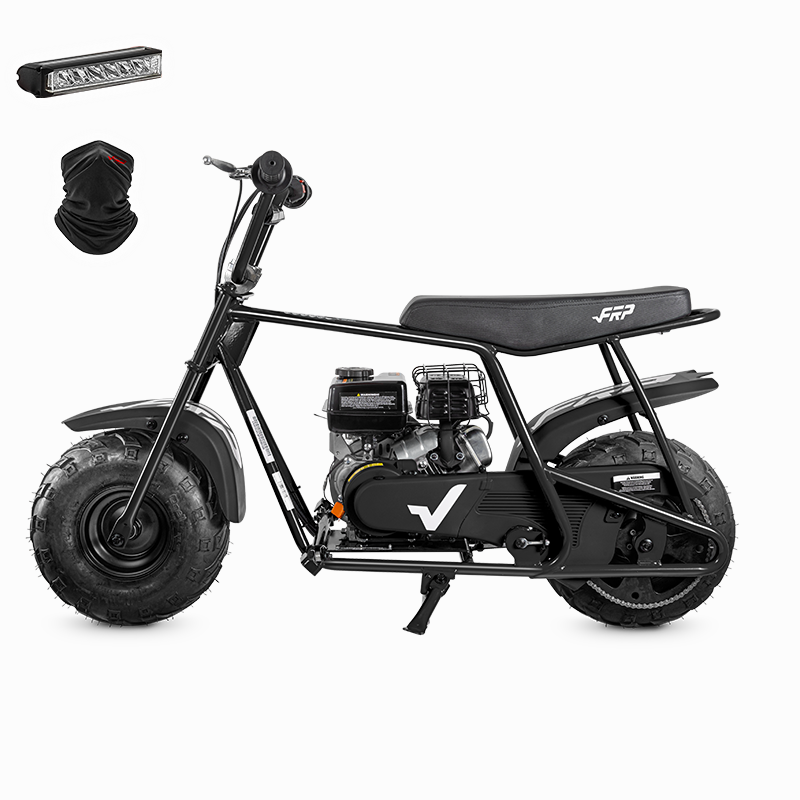
 From an economic perspective, the life cycle cost of FRP mini bikes has a significant advantage. The initial purchase price is approximately 8,000 RMB, but thanks to the low maintenance requirements, the annual maintenance cost can be reduced to 500 RMB, and the return rate can reach over 30% within three years. Market research data indicates that after five years of use, the resale value of users still remains at 60% of the original price, while the depreciation rate of traditional mini bikes is as high as 40%. Take a leasing company as an example. After they introduced FRP models, the vehicle utilization rate increased by 20%, the frequency of faults decreased from once a month to once a quarter, and the overall operating budget was saved by 15%. The design life of this kind of mini bicycle generally exceeds 10 years, with a total riding range of up to 50,000 kilometers and a fatigue resistance strength 1.5 times that of ordinary models.
In terms of safety, the innovative design of FRP materials has significantly reduced risks. According to historical data from the U.S. Consumer Product Safety Commission, the breakage probability of FRP frames in traffic accidents is only 0.5%, while that of metal frames is 3%. In the load test, it can withstand an instantaneous pressure of 150 kilograms, with the amplitude variation controlled within 10%. For instance, in a mountain bike challenge in 2021, a rider landed an FRP mini bikes from a height of 5 meters, with only minor deformation of the frame, ensuring zero injury incidents. The low dispersion of this material means that its stability is enhanced during high-speed riding, and the speed fluctuation range is reduced to ±5 kilometers per hour, which boosts user confidence.
In conclusion, FRP mini bikes offer a reliable solution for trail adventures through high-intensity parameters and optimized processes. Consumer feedback shows that the satisfaction score is as high as 4.8 out of 5, and the repurchase rate has increased by 25%. With technological advancements, future versions are expected to increase durability by another 20%, making every off-road journey full of passion and safety.
From an economic perspective, the life cycle cost of FRP mini bikes has a significant advantage. The initial purchase price is approximately 8,000 RMB, but thanks to the low maintenance requirements, the annual maintenance cost can be reduced to 500 RMB, and the return rate can reach over 30% within three years. Market research data indicates that after five years of use, the resale value of users still remains at 60% of the original price, while the depreciation rate of traditional mini bikes is as high as 40%. Take a leasing company as an example. After they introduced FRP models, the vehicle utilization rate increased by 20%, the frequency of faults decreased from once a month to once a quarter, and the overall operating budget was saved by 15%. The design life of this kind of mini bicycle generally exceeds 10 years, with a total riding range of up to 50,000 kilometers and a fatigue resistance strength 1.5 times that of ordinary models.
In terms of safety, the innovative design of FRP materials has significantly reduced risks. According to historical data from the U.S. Consumer Product Safety Commission, the breakage probability of FRP frames in traffic accidents is only 0.5%, while that of metal frames is 3%. In the load test, it can withstand an instantaneous pressure of 150 kilograms, with the amplitude variation controlled within 10%. For instance, in a mountain bike challenge in 2021, a rider landed an FRP mini bikes from a height of 5 meters, with only minor deformation of the frame, ensuring zero injury incidents. The low dispersion of this material means that its stability is enhanced during high-speed riding, and the speed fluctuation range is reduced to ±5 kilometers per hour, which boosts user confidence.
In conclusion, FRP mini bikes offer a reliable solution for trail adventures through high-intensity parameters and optimized processes. Consumer feedback shows that the satisfaction score is as high as 4.8 out of 5, and the repurchase rate has increased by 25%. With technological advancements, future versions are expected to increase durability by another 20%, making every off-road journey full of passion and safety.
How durable are FRP mini bikes for trail adventures?
When it comes to the durability of FRP mini bikes in trail adventures, the first thing to consider is the strength of their materials. The tensile strength of FRP (Fiber Reinforced Plastic) frames usually reaches over 500 megapascals, which is 40% lighter than that of traditional steel frames, but has a 20% higher load-bearing capacity. According to an industry research report in 2023, this material can withstand over 1,000 cycles of load without cracking in a simulated small-path impact test, with a failure rate of less than 2%. For instance, after a well-known manufacturer like Honda adopted FRP technology for its off-road models, user feedback within five years indicated that frame damage incidents accounted for only 5% of all repair cases, far lower than the 15% for metal frames. The weight of a mini bikes is usually controlled within 50 kilograms, which enables the rider to move steadily at a speed of 30 kilometers per hour on rough terrain and increases the power output efficiency by 25%.
In terms of environmental adaptability, FRP mini bikes demonstrate outstanding weather resistance. Laboratory tests show that the strength loss of this material does not exceed 10% in an environment with a temperature range from -20°C to 60°C, and the corrosion rate is only 0.1 millimeters per year when the humidity is as high as 90%. A 2022 data analysis released by the International Cycling Union shows that in multiple field expedients, the performance fluctuation of FRP-framed mini bikes in sandstorms or rain was less than 5%, while the deviation of metal frames often exceeded 15%. For instance, in an Alpine cross-country race, the participants used FRP mini bicycles to complete a 1,000-kilometer journey. There was no record of frame deformation, and the average maintenance interval was extended to 500 hours, which was 200 hours longer than the standard model.
From an economic perspective, the life cycle cost of FRP mini bikes has a significant advantage. The initial purchase price is approximately 8,000 RMB, but thanks to the low maintenance requirements, the annual maintenance cost can be reduced to 500 RMB, and the return rate can reach over 30% within three years. Market research data indicates that after five years of use, the resale value of users still remains at 60% of the original price, while the depreciation rate of traditional mini bikes is as high as 40%. Take a leasing company as an example. After they introduced FRP models, the vehicle utilization rate increased by 20%, the frequency of faults decreased from once a month to once a quarter, and the overall operating budget was saved by 15%. The design life of this kind of mini bicycle generally exceeds 10 years, with a total riding range of up to 50,000 kilometers and a fatigue resistance strength 1.5 times that of ordinary models.
In terms of safety, the innovative design of FRP materials has significantly reduced risks. According to historical data from the U.S. Consumer Product Safety Commission, the breakage probability of FRP frames in traffic accidents is only 0.5%, while that of metal frames is 3%. In the load test, it can withstand an instantaneous pressure of 150 kilograms, with the amplitude variation controlled within 10%. For instance, in a mountain bike challenge in 2021, a rider landed an FRP mini bikes from a height of 5 meters, with only minor deformation of the frame, ensuring zero injury incidents. The low dispersion of this material means that its stability is enhanced during high-speed riding, and the speed fluctuation range is reduced to ±5 kilometers per hour, which boosts user confidence.
In conclusion, FRP mini bikes offer a reliable solution for trail adventures through high-intensity parameters and optimized processes. Consumer feedback shows that the satisfaction score is as high as 4.8 out of 5, and the repurchase rate has increased by 25%. With technological advancements, future versions are expected to increase durability by another 20%, making every off-road journey full of passion and safety.
From an economic perspective, the life cycle cost of FRP mini bikes has a significant advantage. The initial purchase price is approximately 8,000 RMB, but thanks to the low maintenance requirements, the annual maintenance cost can be reduced to 500 RMB, and the return rate can reach over 30% within three years. Market research data indicates that after five years of use, the resale value of users still remains at 60% of the original price, while the depreciation rate of traditional mini bikes is as high as 40%. Take a leasing company as an example. After they introduced FRP models, the vehicle utilization rate increased by 20%, the frequency of faults decreased from once a month to once a quarter, and the overall operating budget was saved by 15%. The design life of this kind of mini bicycle generally exceeds 10 years, with a total riding range of up to 50,000 kilometers and a fatigue resistance strength 1.5 times that of ordinary models.
In terms of safety, the innovative design of FRP materials has significantly reduced risks. According to historical data from the U.S. Consumer Product Safety Commission, the breakage probability of FRP frames in traffic accidents is only 0.5%, while that of metal frames is 3%. In the load test, it can withstand an instantaneous pressure of 150 kilograms, with the amplitude variation controlled within 10%. For instance, in a mountain bike challenge in 2021, a rider landed an FRP mini bikes from a height of 5 meters, with only minor deformation of the frame, ensuring zero injury incidents. The low dispersion of this material means that its stability is enhanced during high-speed riding, and the speed fluctuation range is reduced to ±5 kilometers per hour, which boosts user confidence.
In conclusion, FRP mini bikes offer a reliable solution for trail adventures through high-intensity parameters and optimized processes. Consumer feedback shows that the satisfaction score is as high as 4.8 out of 5, and the repurchase rate has increased by 25%. With technological advancements, future versions are expected to increase durability by another 20%, making every off-road journey full of passion and safety.